Flu immunization clinics on hold

So Saskatchewan is placing the flu clinics on hold while Health Canada investigates the efficacy of the immunization made by the pharmaceutical firm Novartis.

I had two immediate thoughts when I heard this.

The first was concern, as I had already received my shot. Once I learned that adverse reactions were not the issue I realized that this hold doesn’t affect how I feel about getting vaccines — if there is an immunization available to protect me from something, then I’ll likely be signing up to get it.

My second thought was I wonder if this has anything to do with the delays that were being experienced by Novartis as they worked to get this shot through the various safety and quality tests about a month ago. At the time it was downplayed by both the company (well, obviously) and health officials and the story went largely unnoticed. It could be that they are not at all related, because the vaccine did have to be approved by Health Canada before it was rolled out, but at some point Novartis was experiencing some troubles (however small) with this vaccine.
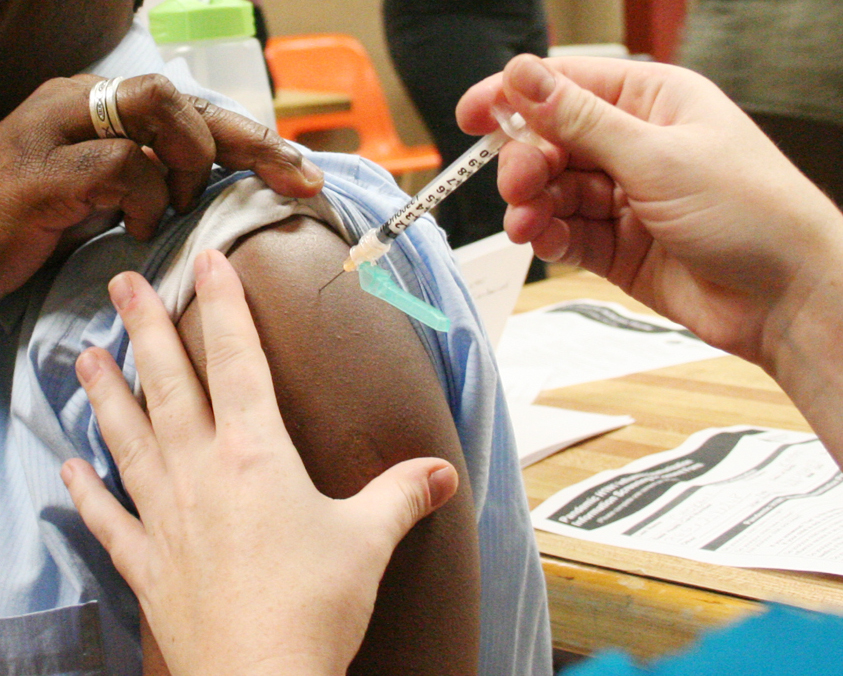
It’s not completely surprising that influenza vaccines cause troubles for the companies that make them. Unlike most vaccines that have years of work poured into them, the flu shot has to be created new every year as researchers work to provide protection against the strains of vaccine that are expected to be problematic in the next year.

If you’ve been reading about the vaccine and wondering what “clumping of virus particles” means, I’ll try to explain as I understand it.

Each vaccine contains protein that helps the non-infectious virus tell the immune system to work. If those proteins are clumping to each other, they aren’t attaching to the immune cells in the human body and therefore not telling the body what the virus looks like. The immune response, or the ability for the body to recognize a virus, is the key in being protected if people come into contact with the real virus during the flu season.

Currently Health Canada doesn’t know what the clumping means, and so far it’s only been seen in Europe, but they want to test to make sure it’s still working properly. As the medical health officer in Saskatchewan said, they are looking to see if the clumping is simply a harmless observation or if it means the vaccine is less effective.

At this point the vaccines are on hold, they are still in cold chain (meaning they are being kept at the ready) and the hold is not a recall or anything like that. Best case scenario, the vaccines are working perfectly and clinics can continue using it in a week or so.

Posted in Health Reporting | Tagged , , , , | Leave a comment

Preparing for Alzheimer’s

I’m a little late with this, like I am most things, but this TED Talk by Alanna Shaikh (who’s blog Blood and Milk is worth following) is a realistic and down-to-earth look at Alzheimer’s.

Not only is she looking to prevent Alzheimer, but she is preparing to get it.

“Because if the monster wants you, the monster is going to get you.”

While she is eating healthy and engaging her mind, she is changing what she is doing for fun, working on building her physical strength and trying to become a better person. As to why, I’ll let her tell you…

I’m a little late with this, like I am most things, but this TED Talk by Alanna Shaikh (who’s blog Blood and Milk is worth following) is a realistic and down-to-earth look at Alzheimer’s.

Not only is she looking to prevent Alzheimer, but she is preparing to get it.

“Because if the monster wants you, the monster is going to get you.”

While she is eating healthy and engaging her mind, she is changing what she is doing for fun, working on building her physical strength and trying to become a better person. As to why, I’ll let her tell you…

Posted in Uncategorized | Tagged , , , | Leave a comment

ART as prevention

The U.S. Food and Drug Administration have approved an ART to prevent HIV-negative people from being infected with the virus. The idea is that so-called high-risk people can take it.

Truvada. Wiki photo

Overall, I think this is a great idea, but I’m a little concerned over who will be able to access it and who will not.

For example, I think discordant couples are a great place for Truvada to be used in a prevention setting. The person who is HIV negative can have just one layer of extra protection. I also think it is a great idea for commercial sex workers, especially those for who may find themselves in a position where they cannot demand condom use.

But I have a concern for the Saskatchewan setting (should it ever be approved in Canada) and it’s high-risk drug using population. My concern is this, when it comes to injection drug users, who are actively using and thus at risk, will they be able to take the medication as regularly as required? This ART, like antibiotic, taken incorrectly could create a resistant strain of HIV. To have Truvada work, there would need to be very efficient outreach systems in place, where IDU (intravenous drug users) would have the support they need. It’s more than just the medication they require, but housing, nutrition and addictions support. It would need to be daily. I don’t see those systems in place now. There are some, but it’s not enough.

So, while I think it is fantastic that Truvada has been approved in the United States, there needs to be a lot more work before an ART could be used effectively in Saskatchewan.

Posted in Uncategorized | Leave a comment

HIV Grand Rounds

Time flies when you are having fun or something like that anyway.

I had plans to post this ages ago, but ran out of time/procrastinated.

It’s a short video introducing some of the people from my project the Face of HIV in Saskatchewan. I used it during my presentation to doctors and health care providers during Saskatchewan Provincial Leadership team’s HIV Grand Rounds. It was a rather intimidating experience, but once I was comfortable, I actually really enjoyed the opportunity to speak with many like-minded people from across the province.

The idea behind the Face of HIV in Saskatchewan was that every person who was comfortable coming forward and saying who they are and that they are living with the virus, makes it easier for the next person to come forward and do the same. Together they can work to reduce the stigma and discrimination faced by those living with HIV.

Posted in Health Reporting, HIV/AIDS | Tagged , | Leave a comment

The Grandest Challenge

The Grandest Challenge Symposium was well worth the trip to Toronto.

Along with hearing the inspiring messages from people such as James Orbinski, founder of Dignitas International, and Samantha Nutt, founder of War Child Canada, I realized it is okay to be angry with the ways of the world.

In fact, Stephen Lewis seems to be able to sum it up best when he told the audience they shouldn’t feel deflated after hearing message after message of health failures on a global scale and about health inequality.

“Be angry, oh my god, there is nothing better than to ricochet between anger and rage,” he said, but added that people shouldn’t feel helpless.

His wife, Michele Landsberg, a long-time columnist, has always told him that the very definition of a columnist is someone who wakes up every morning and gets into a rage. This makes me feel like my anger at world events is not totally misplaced and means I’m not alone, which I find reassuring.

The event itself took place for more than six hours in the beautiful Bram and Bluma Appel Salon at the Toronto Reference Library.  It was packed with ordinary people listening to doctors and experts with extraordinary messages.

Abdallah Daar and Peter Singer spoke about their recent book, The Grandest Challenge, and how they see the way to a better future for all, especially those in developing nations is innovation. To that end the pair founded Grandest Challenges Canada, an organization that gives grants to people doing innovative research. One such person is Ophira Ginsburg, who just so happened to be sitting next to me. She has this amazing project that allows community health workers to take breast cancer screening to small communities in Bangladesh.

Up next was one of my heroes, James Maskalyk, an MSF physician and author of Six Months in Sudan. He said something that I have been trying to avoid for years – well ever since giving up the dream of being a doctor to be a journalist.

He said, it doesn’t matter how sweet the story is, or who hears it, the best way to help people is to physically help each individual. He wants people to go to medical school and sign up for MSF. I have to believe that the stories I tell, especially those about people on-reserve or those in developing countries, are helping those people, or else I don’t have much else to cling to.

James Orbinski and Samantha Nutt are physicians, authors and truly amazing people. I feel like the world would be a better place if they could just be heard by everyone. I only recently read my signed copy of Nutt’s book Dammed Nations and I think it should be required reading.

Posted in Health Reporting | Leave a comment